Key takeaways
- The base matters more than the turf.
- A typical install includes removal, grading, base, turf, seams, fastening and infill.
- Good installers plan drainage and edges before they unroll a single roll.
1. Measure and plan
A good install starts with measuring, marking the area and planning edges, slopes and drainage. This is when you choose turf, discuss pet or play features and plan how the lawn meets patios, beds and trees.
2. Remove the old surface
Existing grass, weeds and a layer of soil are removed so roots do not decompose under the turf. Irrigation lines and utilities are located and protected.
3. Grade and build the base
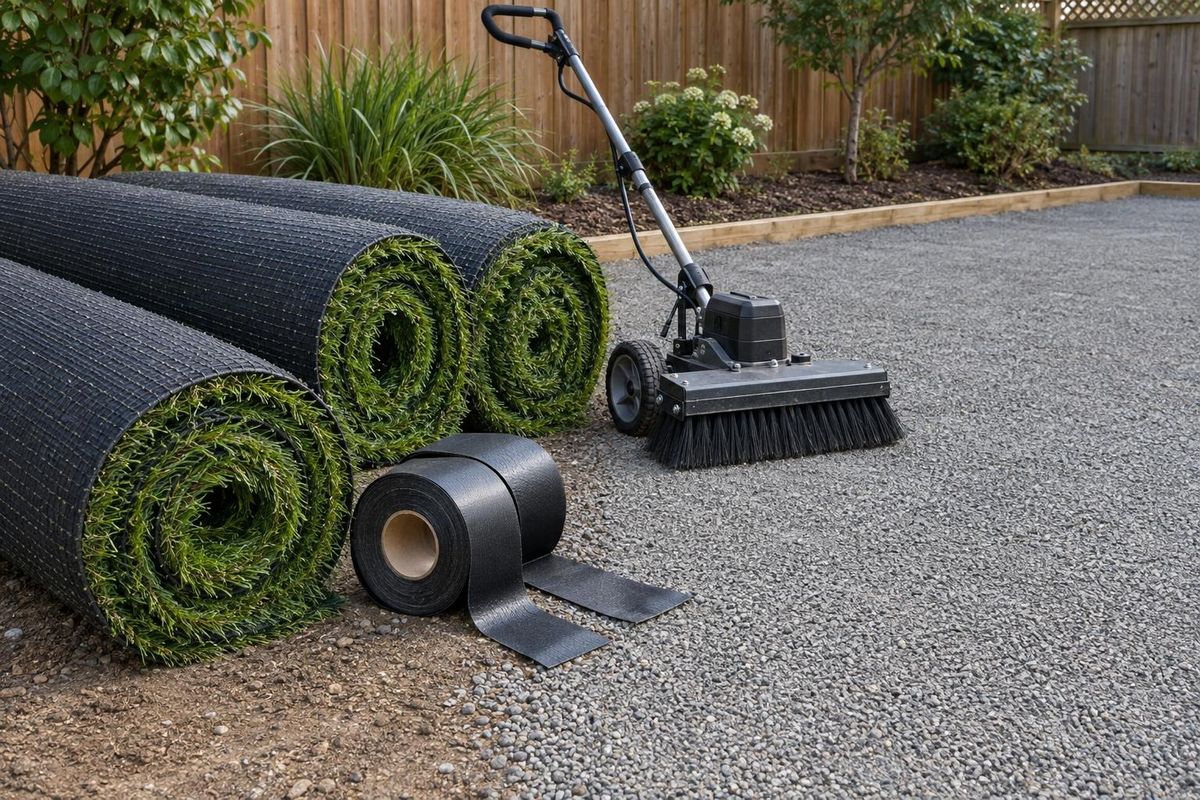
The area is shaped to drain, then a layer of crushed stone is placed and compacted in lifts. Many installs use a base of around three to four inches, more for soft soil or heavy use. A weed barrier may be added.
4. Set edges
Edging, borders or pavers are installed to hold the perimeter and frame the lawn.
5. Roll out, cut and seam
Turf is rolled out with the blades facing the same direction, cut to fit and joined at seams with tape and adhesive. Direction and tension matter for an invisible seam.
6. Secure, infill and groom
The perimeter is fastened, infill is spread and the turf is power-brushed so the blades stand up. A final walk-through finishes the job.
Quick answers
How long does installation take?
It depends on size and site conditions. A typical backyard is a matter of days, with prep and base taking most of the time.
Can turf be installed in any weather?
Turf can go in most of the year. Heavy rain or frozen ground may delay base work.