Key takeaways
- A permeable, compacted base keeps turf flat and dry.
- Clay and shallow limestone need extra attention to drainage.
- Slope and edges are part of the drainage plan.
Why Middle Tennessee is different
Much of Middle Tennessee has clay soils that drain slowly and limestone close to the surface. Spring storms can drop a lot of rain quickly. If water has nowhere to go, it sits under the turf.
The base layers
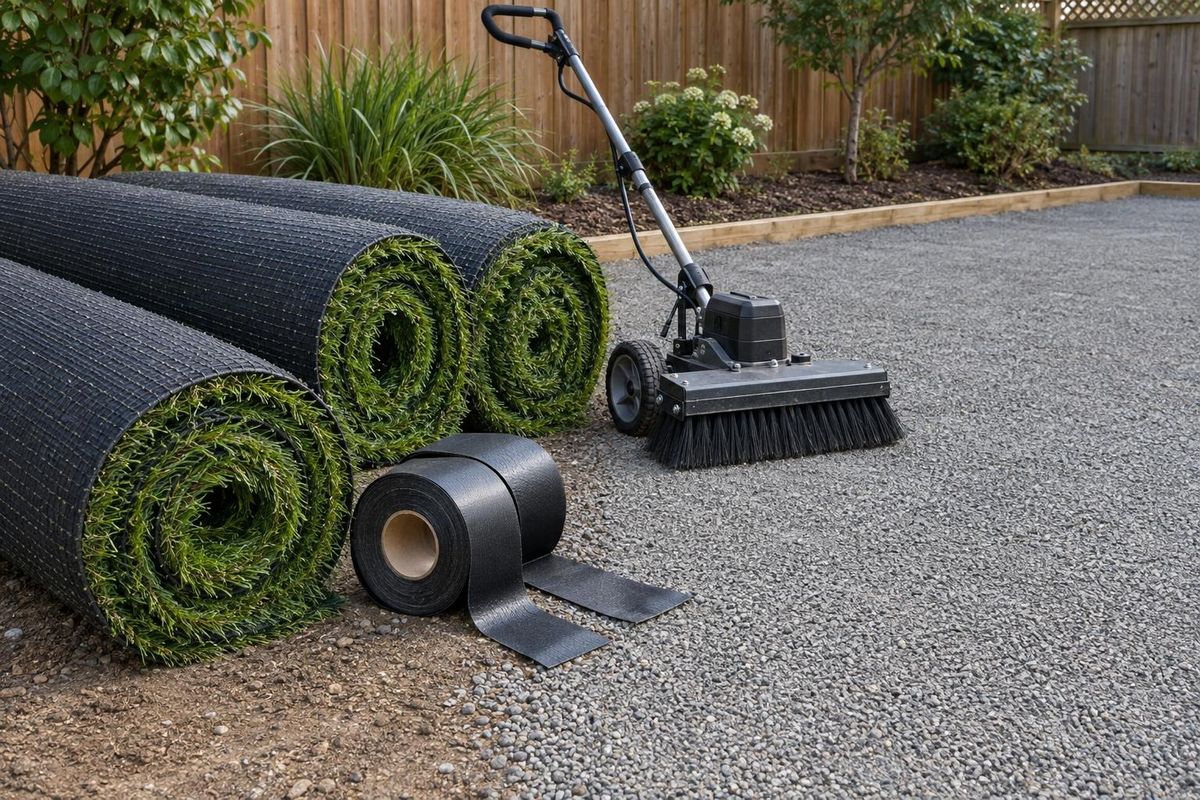
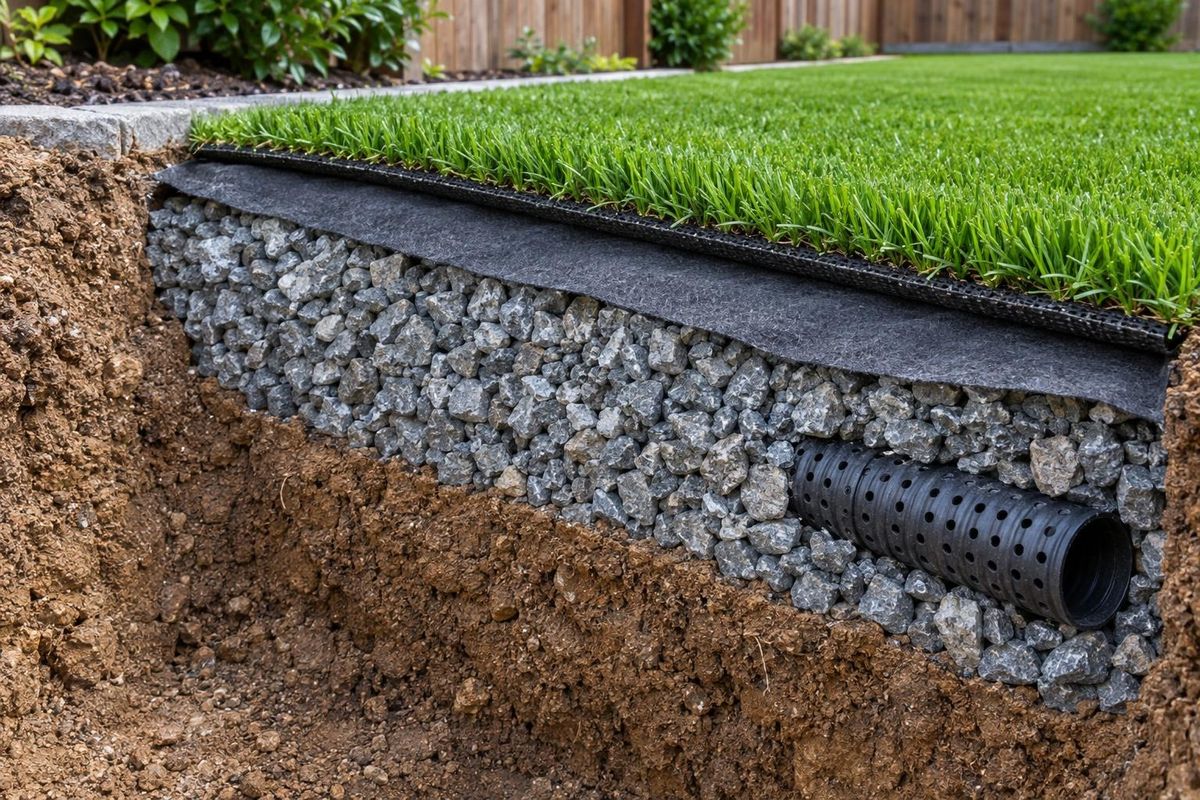
A typical base uses compacted crushed stone placed in layers over a graded subgrade, often with geotextile fabric to keep soil and stone apart. A smooth, even top layer gives a flat finish.
Slope matters
A slight slope, often around one to two percent, carries water off the surface and away from structures. Flat areas need extra drainage options.
When drains are needed
Low spots, downspout runoff and persistent wet areas may call for French drains, catch basins or extended base depth.
Edges and transitions
Borders and edging hold the base in place and manage water at the perimeter. Transitions to patios and beds should not trap water.
Quick answers
How deep should the base be?
Many installs use around three to four inches of compacted stone, deeper for soft soil or heavy use. We plan it for your site.
Can I put turf on clay soil?
Yes, with the right base and drainage. We build for clay every day.