Key takeaways
- Pile height, stitch density and face weight work together.
- Choose the product for the job: lawn, pets, play or golf.
- Always look at samples outdoors in your own light.
Pile height
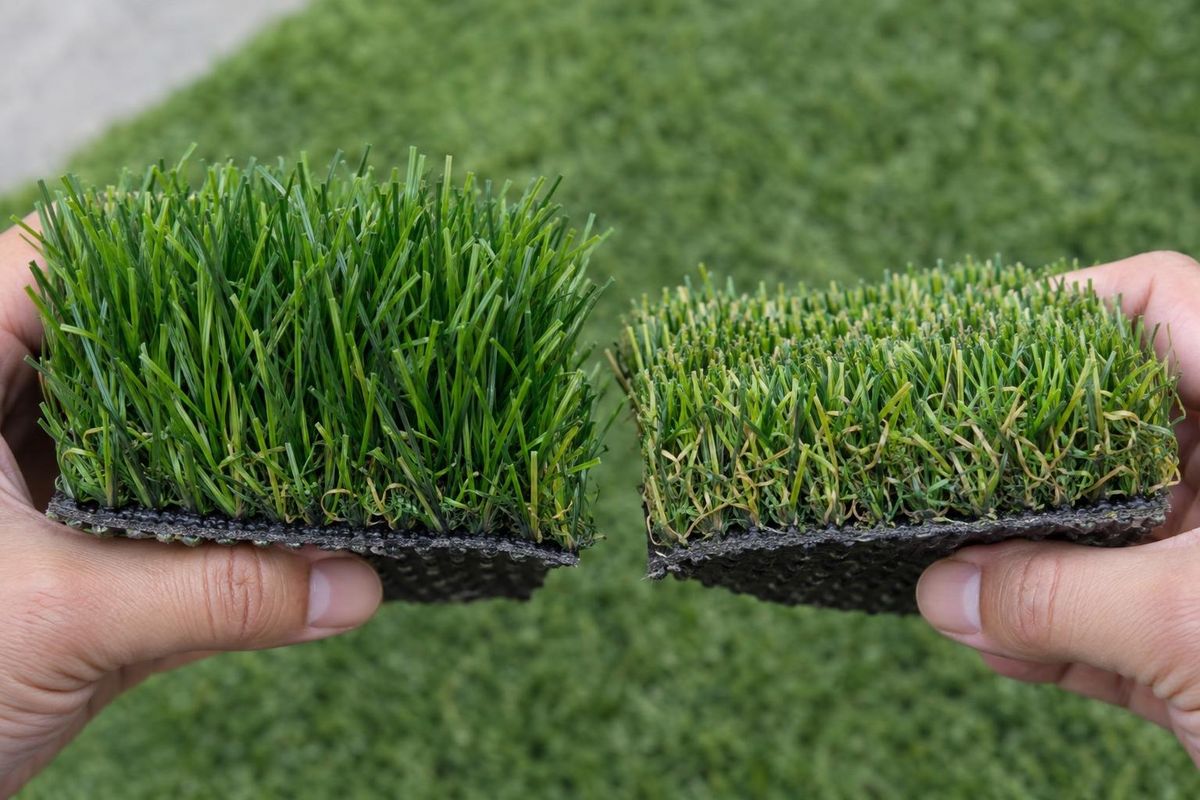
Pile height is the length of the blades. Taller pile looks plush and natural for lawns; shorter pile is firmer, easier to clean and used for putting and sports.
Density and face weight
Stitch density and face weight describe how much fiber is in the turf. More fiber generally means a fuller look and better wear, but also a heavier product. Balance appearance with how the area will be used.
Blade shape and color
Blades come in different shapes that affect look, feel and how they spring back. Mixed shades of green and brown thatch give the most natural look. Lighter tones can look less intense in the sun.
Backing and drainage
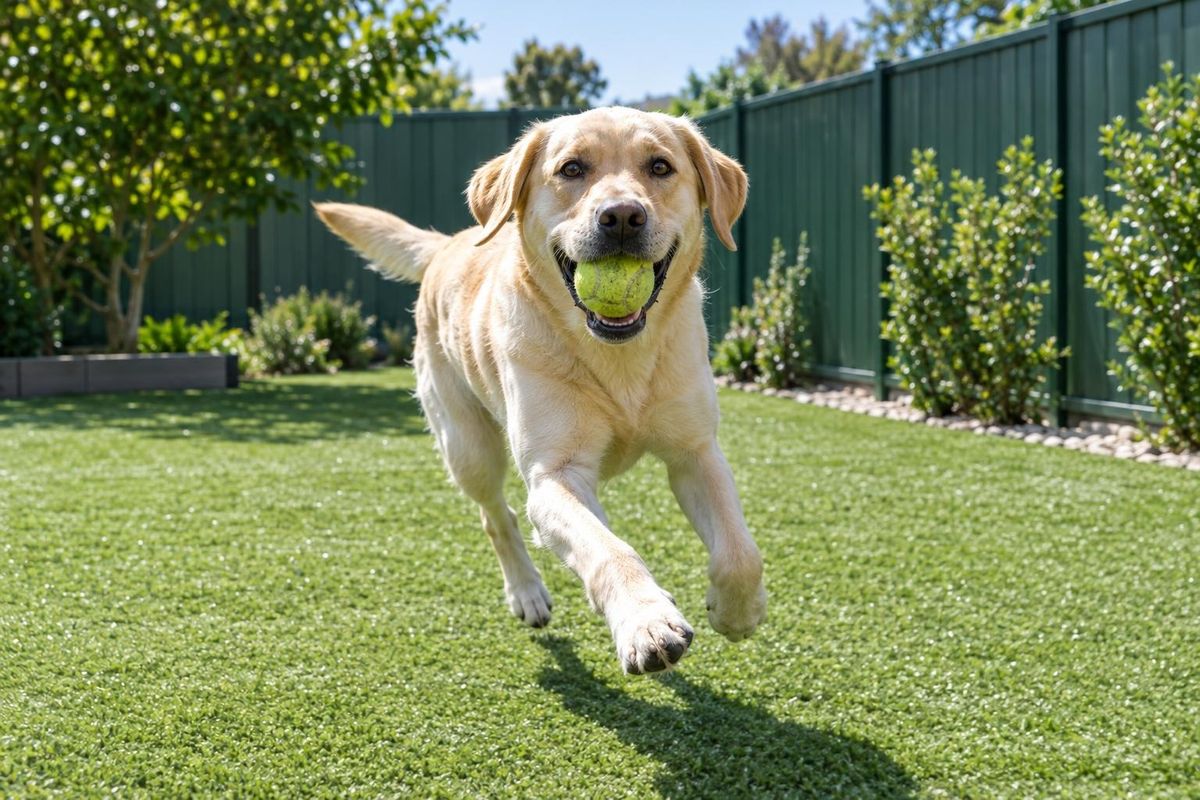
The backing holds the fibers and determines drainage. Perforated or fully permeable backings are important for pets and rainy climates like Tennessee.
Match the product to the job
Lawns favor plush, multi-tone turf. Pet yards favor durable, drainage-ready products. Playgrounds need softer, well-cushioned systems. Putting greens use ultra-short, dense fibers.
See samples outdoors
Colors change with light. Look at samples in full sun and shade, next to your home and plants, and walk on them in bare feet if you can.
Quick answers
What is a good pile height for a lawn?
Many residential lawns use a medium-to-tall pile for a natural look. We help you compare options in person.
Does color matter?
Yes. Multi-tone blends look more natural than a single flat green.