Key takeaways
- Turf wins on upkeep, water use and year-round green; natural grass wins on cool, soft feel in full sun.
- Shade, slopes, pets and heavy use are where turf shines.
- The right choice depends on how you use the yard and what you enjoy.
Upkeep and time
A natural lawn needs mowing, edging, fertilizing, weed control and reseeding. Synthetic turf needs occasional rinsing, brushing and debris removal. If you want your weekends back, turf is a clear advantage.
Water and chemicals
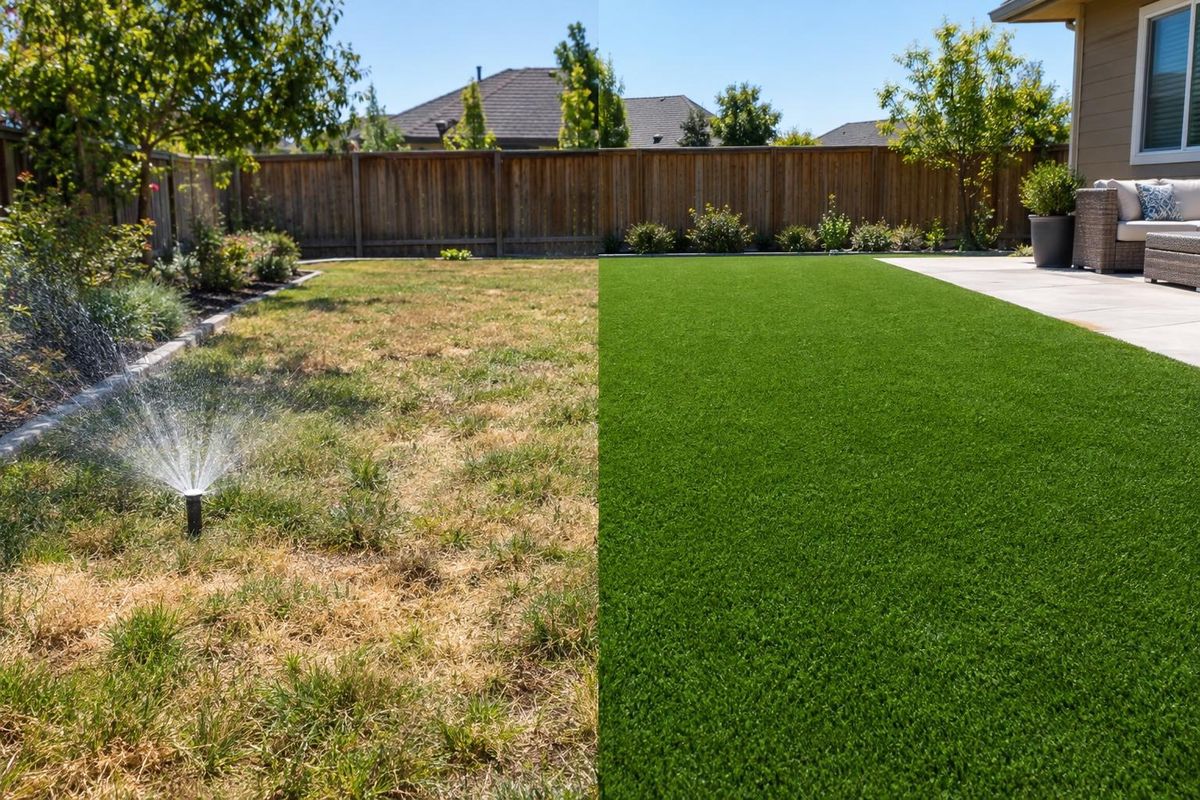
Natural grass in Tennessee summers often needs regular watering to stay green. Turf needs no irrigation to stay green and no fertilizer or herbicide, which also removes chemicals from play areas and pet yards.
Heat and feel
Natural grass stays cooler in full sun because it releases moisture. Synthetic surfaces can get noticeably warmer in direct sun. Shade, lighter colors and a quick rinse help, and many people place turf where it gets some shade.
Where grass struggles
Dense shade, steep slopes, heavy foot traffic and dog-worn areas are tough for natural grass. Turf stays green in all of those and keeps mud out of the picture.
Looks and value
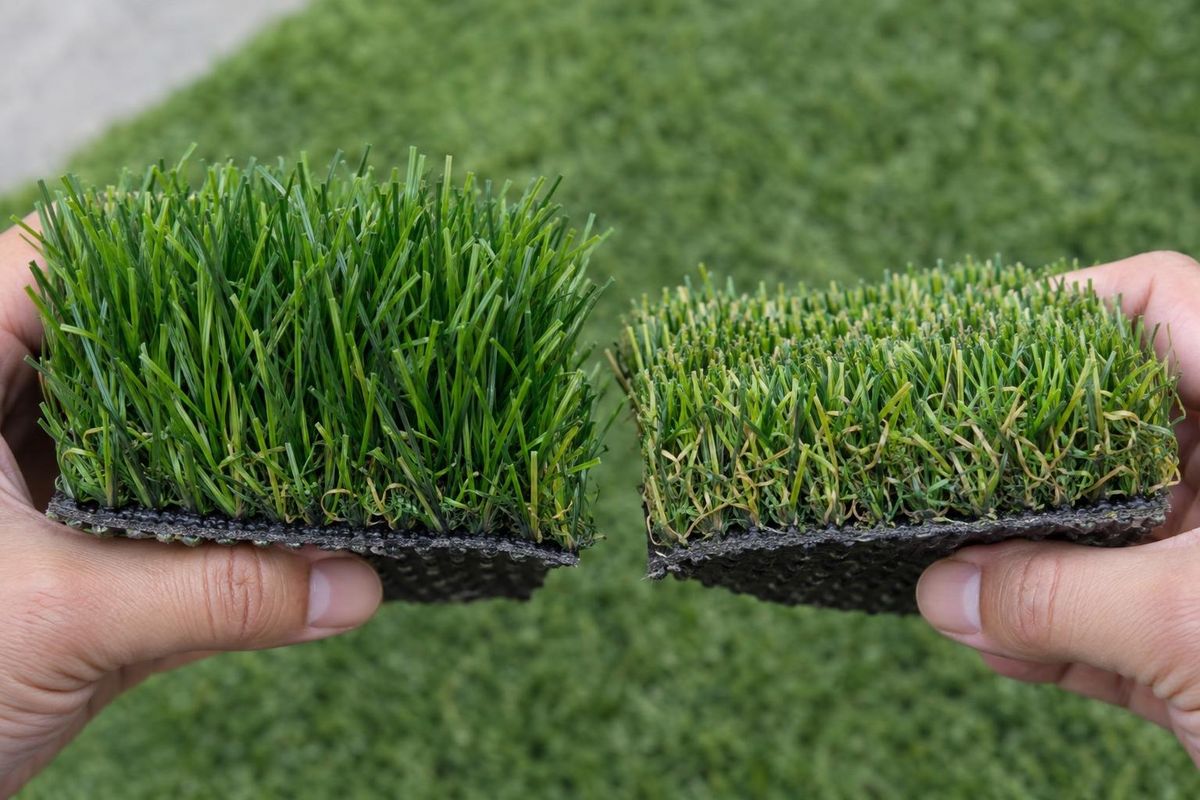
Modern turf uses multiple blade shades and thatch fibers for a natural look. Some homeowners love the feel of real grass and keep it where they enjoy it, turfing the hard spots. A hybrid approach is common.
Quick answers
Is artificial turf better than grass?
It depends on your goals. It is easier to maintain and holds up to heavy use, while natural grass is cooler and part of a living landscape.
Can I mix turf and natural lawn?
Yes. Many homeowners turf play areas, shade and pet zones and keep natural lawn elsewhere.