Key takeaways
- Drainage is the key to a fresh pet yard.
- Pick up solids and rinse; add a deodorizing treatment as needed.
- Choose a pet-ready turf and infill from the start.
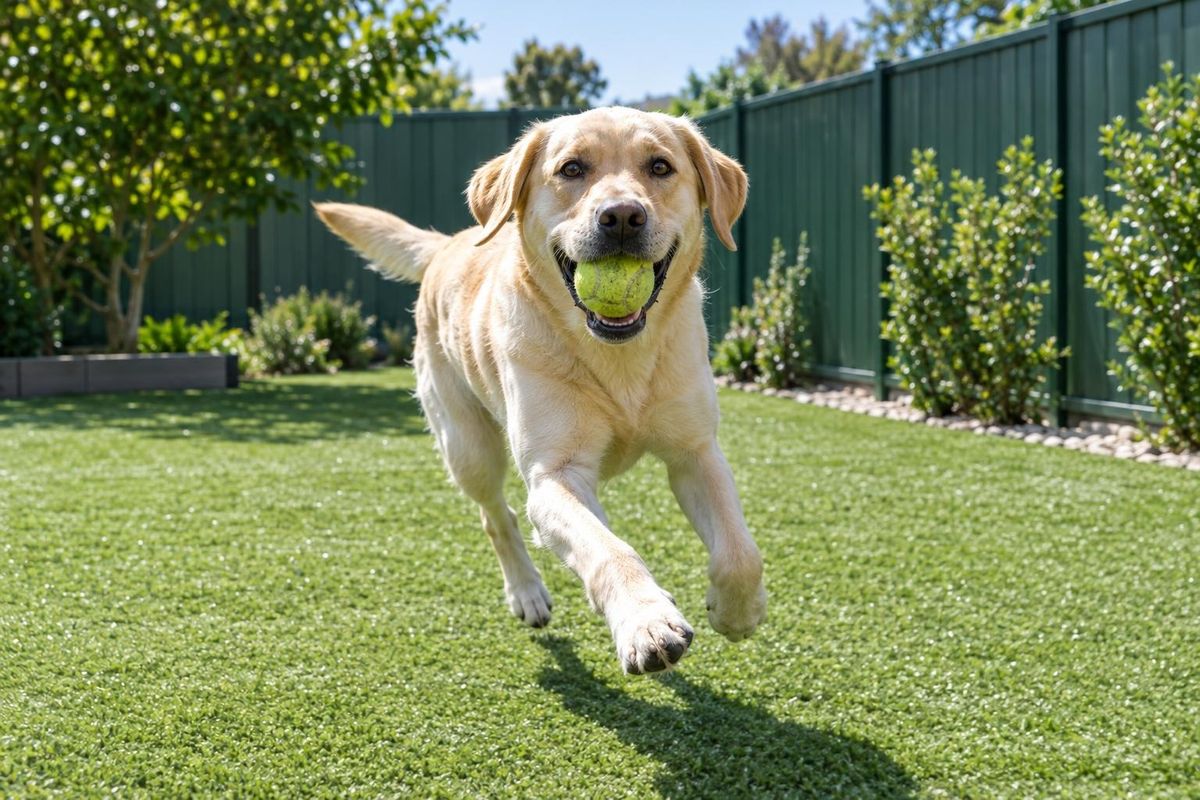
Why dogs and turf work well together
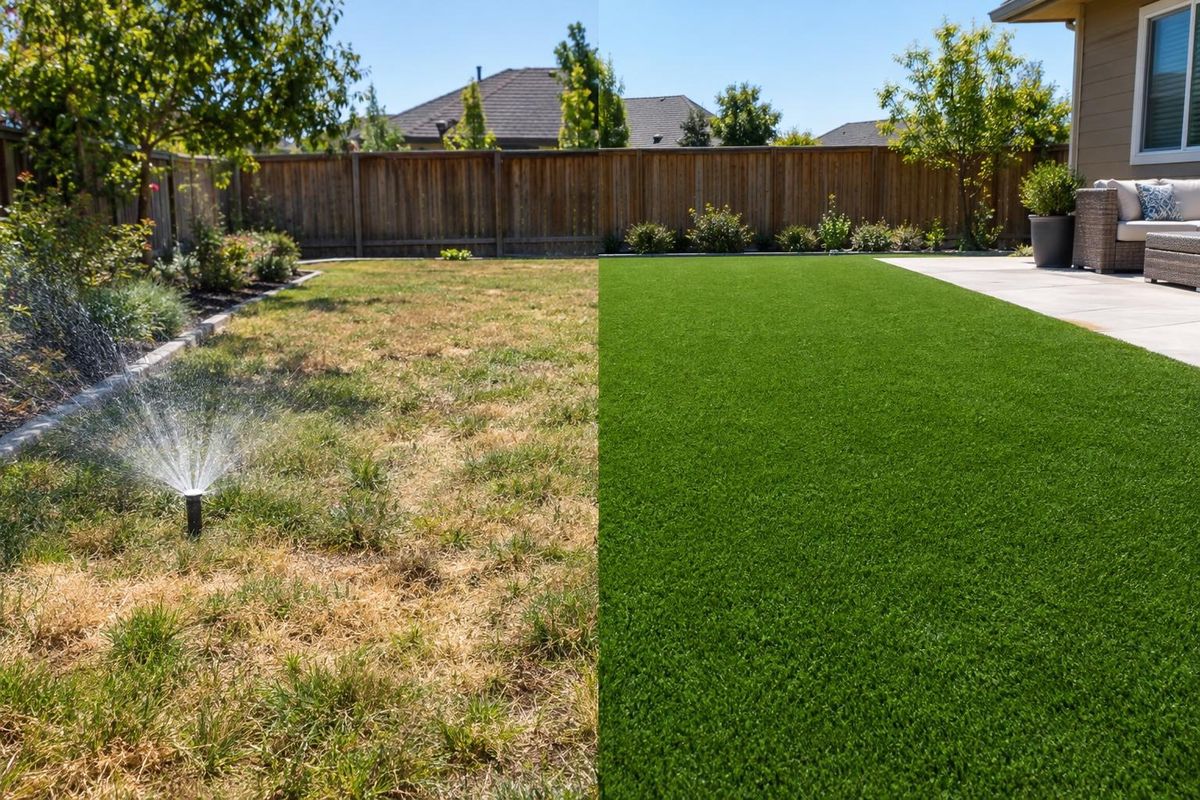
Turf does not turn brown from urine, does not become mud and cannot be dug up like soil. For many owners, it solves the mud, dirt and brown-spot problem completely.
Drainage and urine
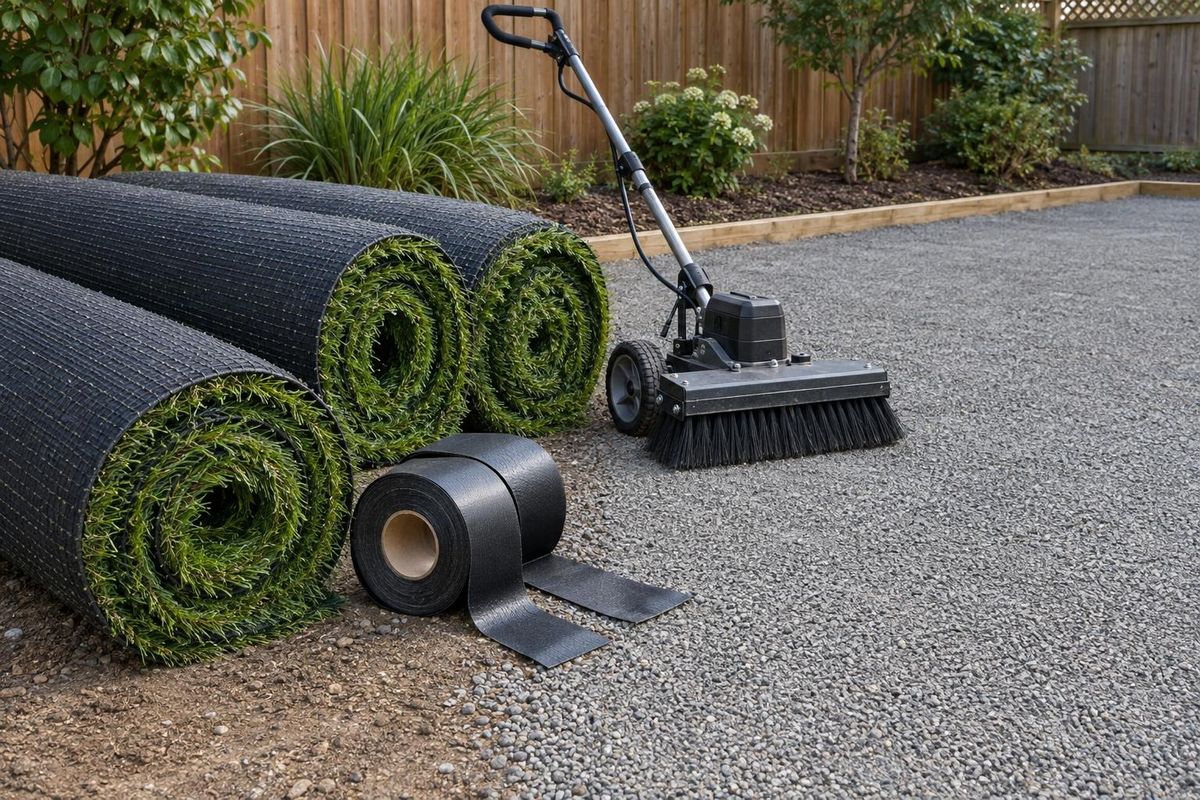
Liquids need to pass through the turf quickly. Pet turf uses drainage-ready backing over a permeable base so urine moves down rather than sitting. Regular rinsing flushes residue.
Infill choices
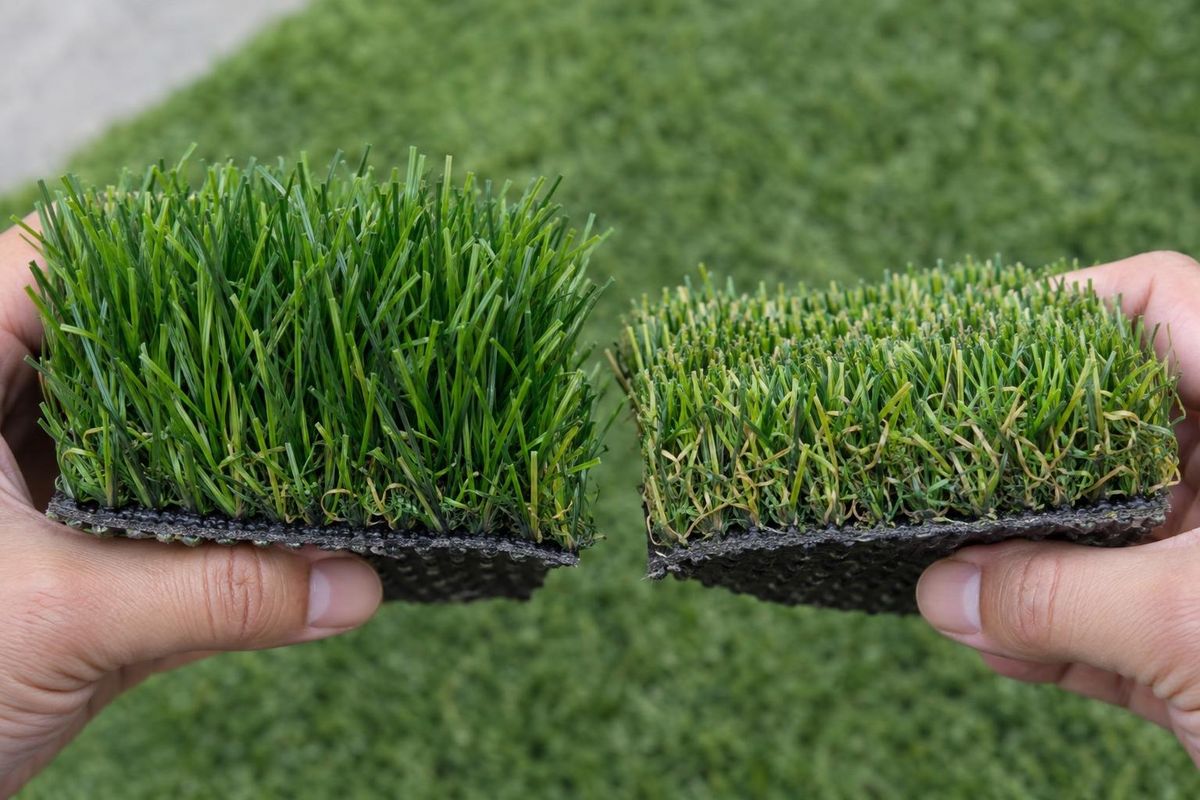
Infill keeps blades upright and helps with odor. Options include silica sand and antimicrobial-treated sand. The right choice depends on your pets and how often you clean.
Digging and chewing
Securely fastened edges resist digging. Some dogs are determined diggers and may need extra fastening or a border. Turf blades are durable, but puppies can chew.
A simple routine
Pick up solid waste promptly, hose the area regularly, brush the blades and use a pet-safe deodorizer as needed. Deep cleaning a few times a year keeps things fresh.
Where to place it
Place pet turf where dogs spend time, near the door or in a dedicated run. In sun, consider shade so dogs stay comfortable.
Quick answers
Will my turf smell like urine?
Not if it drains well and is rinsed regularly. We build for drainage and show you a routine.
Is turf safe for dogs?
Ask for specifications from your installer and choose products made for pets. We install turf intended for pet use.